


Broken Storefront Glass? Here’s What Insurance Covers

Updated: Jun 10

Storefront glass damage is one of the most common commercial insurance claims for retail stores, restaurants, and office spaces. While many business owners assume the damage is automatically covered, the reality depends on the cause of damage, policy type, and how the incident is documented.
Based on our experience, having a clear understanding of how insurance works can help prevent claim delays, disputes, and unexpected out-of-pocket costs.
How storefront glass is covered in insurance policies
Most commercial insurance policies include storefront glass under general building coverage, but protection is not always complete. Coverage typically falls into three categories:
Basic commercial property insurance with limited glass protection
Standard coverage with conditional protection
Glass or plate-glass endorsement for full storefront protection
Many businesses only discover coverage gaps when dealing with urgent situations like sliding glass door repair in Orange County or entry system damage that goes beyond simple glass breakage.
What insurance typically covers
Insurance usually applies when damage is sudden, accidental, and caused by an external event.
Sudden impact or accidental breakage
It includes vehicle impact, equipment or cart collisions, and accidental breakage during normal operations. These claims are usually processed faster because the cause is clear and easy to verify.
Vandalism and forced entry
Most commercial policies cover break-ins and intentional damage. This can include broken storefront glass during attempted burglary, full glass replacement, frame or entry system damage, and emergency board-up services.
In many cases, both glass and door systems are damaged, requiring commercial door repairs in Orange County as part of the restoration process.
Storm or external object damage
Coverage may include wind-blown debris, hail impact, and falling objects such as trees or signage
However, insurers often check whether pre-existing stress or weakness contributed to the damage.
Emergency protection after damage
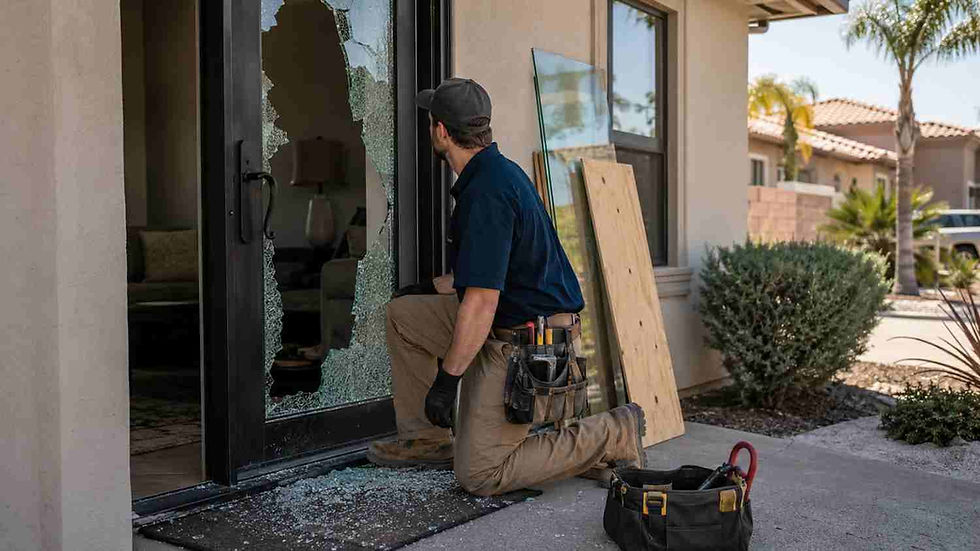
Most policies reimburse reasonable steps taken to secure the property after an incident, including emergency board-up services, temporary sealing or protection, and short-term security measures. Quick action helps prevent further loss or liability issues.
We always advise business owners to act quickly here, as delays in securing the property can increase both damage and insurance complications.
What is usually not covered
Many claim issues come from exclusions that business owners do not expect.
Gradual or pre-existing damage: Slow-developing cracks or damage present before the incident are not covered.
Wear and aging: Damage caused by long-term wear, UV exposure, or material fatigue is excluded.
Installation or construction issues: If failure is due to improper installation, it is treated as the contractor's responsibility, not insurance coverage.
Cosmetic damage: Scratches, haze, or minor surface imperfections are usually not covered unless they affect function.
The most overlooked insurance gap
Many businesses assume storefront glass is fully covered by default. In reality, full protection often requires a glass or plate-glass endorsement.
This is especially important for modern storefronts with large glass panels, sliding systems, and custom entry designs. In many cases involving glass door repair services in Orange County, coverage depends on whether the damage is classified as sudden impact or long-term stress failure.
Without proper coverage, reimbursement may be partial or limited.
How a storefront glass insurance claim works
When damage occurs, the process usually follows a clear sequence:
1. Documentation
Photos and videos are taken immediately to record the damage from multiple angles.
2. Securing the storefront
Board-up or temporary protection is installed to prevent theft or further damage.
3. Filing the claim
The incident is reported to the insurance provider with supporting documentation.
4. Adjuster inspection
The insurer evaluates:
Cause of damage
Extent of loss
Policy coverage
Signs of pre-existing damage
5. Claim decision
The claim is approved, partially approved, or delayed for further review.
6. Repair or replacement
Once approved, repair work is scheduled.
In some cases, additional entry system damage may also require door repair service in Los Angeles County during restoration.
What affects claim approval speed
Approval depends on more than just the damage itself.
Key factors include:
Clarity of incident documentation
Whether the damage appears sudden or gradual
Policy structure and endorsements
Quality of evidence provided
Even similar damage cases can have different outcomes based on these details.
Need Emergency Storefront Glass Repair?
Storefront glass damage may be covered by insurance, but delays in securing the site or documenting the damage can slow claims and increase risk.
At OC Glass Service, we provide 24/7 emergency response for broken storefront glass, sliding doors, and commercial entry systems. We secure your property quickly with board-up service and fast repair support, and we also help you with proper documentation to support your insurance claim.
From sliding glass door repair in Orange County to full storefront damage, we restore safety on-site. We also handle full glass door replacement services in Pasadena when needed.
Call OC Glass Service anytime for fast emergency glass repair, insurance support, and storefront protection.
FAQs
1. Does insurance cover broken storefront glass?
Most commercial insurance covers broken storefront glass if the damage is caused by accidents, vandalism, or impact. Coverage depends on the policy and whether glass coverage is included. Pre-existing cracks or wear and tear are usually not covered.
2. What should be done immediately after storefront glass breaks?
Immediate steps include securing the area, preventing access to broken glass, and arranging emergency board-up. Quick action helps reduce safety risks and may support insurance claim approval.
3. How much does storefront glass repair usually cost?
Cost depends on glass size, frame type, damage level, and whether full replacement is required. Emergency repair and commercial storefront systems typically cost more than standard glass replacement due to size and installation requirements.
4. Will insurance pay if storefront glass was vandalized or broken into?
Most commercial policies cover vandalism and break-ins, including shattered storefront glass and damaged entry systems. Insurance may also cover emergency board-up and replacement if the damage is clearly documented.
5. Can storefront glass be repaired, or does it need full replacement?
Minor cracks or partial damage may sometimes be repaired, but full replacement is required if structural integrity is affected. Sliding systems or commercial entry doors often require full replacement when frames or hardware are damaged.
6. How fast can emergency storefront glass repair be done?
Emergency storefront glass repair is typically handled on the same day, depending on availability and damage severity. Services include board-up, temporary securing, sliding glass door repair, and full storefront replacement when needed.


Comments